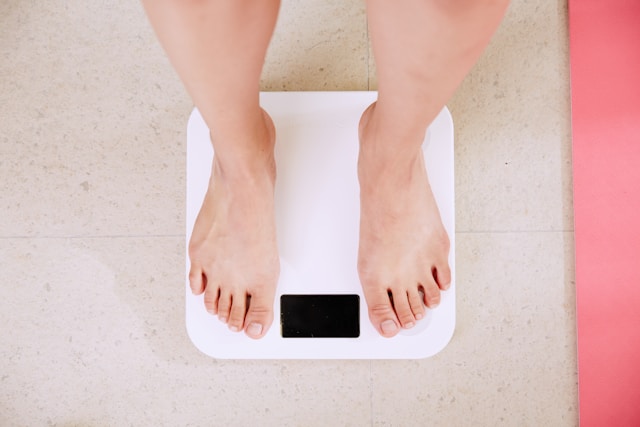
Have you ever wondered why your body tends to stick around the same weight, no matter what you try to do or how much you exercise? Scientists have a word for this, and it’s called the body’s set point. The idea is that it is constantly trying to maintain homeostasis by maintaining the same weight over time.
Because of this, you are much more likely to feel hungry when you try to lose weight and go below your body’s set point. At the same time, you’ll often feel full and may not want to eat dinner one night because perhaps you’ve eaten more calories than your body needed earlier in the day.
Not being able to lose weight from your body’s set point isn’t a matter of willpower. It’s just the way your biology operates. Here’s some information about how your body’s set point works and what you can potentially do to change it.
Your brain is your biological thermostat
For many years, weight loss researchers wondered why some people just simply couldn’t lose weight no matter what they did. It seemed like their body was fighting against them every step of the way.
It turns out that the brain has a thermostat similar to your home. The idea is to maintain the same body weight over time, just like a home thermostat maintains the same temperature. The part of the brain responsible for this is the hypothalamus. It samples signals from the blood to determine how much energy stores you have. If your weight drops below your genetic baseline, it drops defensive measures to encourage you to go out and eat more.
As pharmacists like St Mary’s Pharmacy, there are now powerful medical options to overcome these processes. These only arrived in the last 5 to 10 years or so. Throughout most of modern history, there haven’t been any real options to help people regulate their weight other than diet and exercise. For many people, those measures only brought temporary results.
Hormones are secret enforcers
Hormones are the body’s secret enforcers of weight. They send systemic signals to the rest of the body as powerful chemical messages that regulate appetite and the number of calories you want to consume.
A major hormone in this process is leptin, produced by fat cells. When fat stores increase, leptin increases, telling the hypothalamus to decrease food intake and increase energy expenditure. This is one of the reasons why you might feel like you have a lot of energy after you’ve eaten a large amount of high-quality food.
Ghrelin is the hunger hormone made in the stomach. It increases when the body senses it’s in an energy deficit and needs to eat more. That’s why you often feel hungry when your stomach has been empty overnight.
Crash diets trigger an evolutionary response
These factors are why crash diets rarely work the way people intend. For many people, they trigger an evolutionary emergency, where the body effectively shuts down non-essential processes and focuses on preserving energy. Overeating then occurs once the diet ends.
Image: Unsplash – CC0 License