A small bedroom doesn’t have to mean a cluttered one. Whether you’re working with a boxy spare room, a snug loft conversion, or a period property where space comes at a premium, the right storage choices can make a room feel bigger, calmer, and far more liveable. The trick is picking solutions that earn their keep — visually as well as practically — rather than just cramming furniture in and hoping for the best.
We’ve rounded up eight of the most effective small-bedroom storage ideas, rated by space-saving impact, cost, and effort, so you can find the one that suits your room, your budget, and your patience for DIY. Some of these are weekend projects you can tackle with a trip to a homeware shop; others are longer-term investments that pay off for as long as you live in the house. Most bedrooms end up needing a combination rather than a single fix, so think of this less as a ranked list and more as a menu to pick from.
1. Fitted Wardrobes Space-saving impact: 5/5 | Cost: ££££ | Effort: Low (once installed)
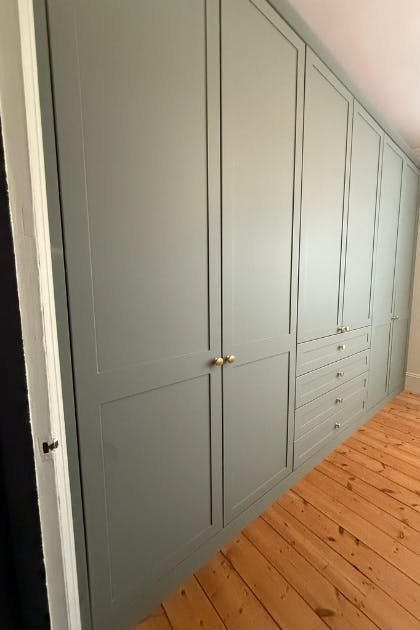
Nothing makes better use of an awkward bedroom than a wardrobe built to fit it exactly. Unlike freestanding units, fitted wardrobes run floor-to-ceiling and wall-to-wall, so there’s no wasted gap above, beside, or behind them — space that a standard flatpack unit simply can’t reach. They’re particularly good in rooms with sloped ceilings, alcoves, or awkward corners, since the interior can be configured around the room rather than the other way round. Brighton-based fitted wardrobe specialists like Brighton Bespoke Interiors design each one around the homeowner’s storage needs — think pull-out shoe racks, integrated lighting, or a hidden dressing area — so you’re not just buying storage, you’re buying back floor space. It’s a bigger upfront investment than a flatpack wardrobe, but for a genuinely small room, it’s usually the single biggest difference-maker on this list.
2. Under-Bed Storage Space-saving impact: 3/5 | Cost: £ | Effort: Low
The space under a bed is one of the most underused areas in most bedrooms. Storage boxes, vacuum bags for out-of-season clothing, or a bed frame with built-in drawers can absorb a surprising amount of clutter without taking up a single extra inch of floor space. It’s especially good for things you need to keep but rarely reach for — spare bedding, off-season coats, suitcases — which would otherwise end up stuffed into an already-full wardrobe. It won’t solve a serious storage shortfall on its own, but as a low-cost, low-effort top-up to a bigger storage plan, it’s hard to beat.
3. Floor-to-Ceiling Shelving Space-saving impact: 4/5 | Cost: ££ | Effort: Medium
Small rooms often have plenty of unused vertical space, even when the floor is fully accounted for. Slim shelving units that run up to the ceiling make use of that “dead” air above eye level, which is ideal for books, folded clothing, or display boxes you don’t need daily access to. Because the eye is drawn upward, tall shelving can also make a low-ceilinged room feel taller than it is — a handy side effect for period cottages and converted lofts alike. The main thing to get right is depth: a narrow, deep shelf will loom over a small room, while a shallow one keeps the wall feeling open even when it’s fully loaded.
4. Multi-Functional Furniture Space-saving impact: 3/5 | Cost: ££ | Effort: Low
An ottoman bed base, a storage bench at the foot of the bed, or a bedside table with drawers all do double duty — furniture you needed anyway, doing extra work. It’s an easy way to claw back storage without adding a single new piece of furniture to the room, which matters more than people expect in a genuinely small space, where every additional item eats into floor area you can’t spare. An ottoman bed in particular can swallow the equivalent of several storage boxes’ worth of bulky items — spare duvets, out-of-season shoes — while looking, to anyone visiting, like an ordinary bed.
5. A Proper Declutter First Space-saving impact: 5/5 | Cost: Free | Effort: Medium
It sounds obvious, but it’s the step most people skip. Before buying anything, it’s worth being honest about what’s actually earning its place in the room. A seasonal edit — donating clothes that haven’t been worn in a year, moving keepsakes to a loft or under-stairs cupboard — often frees up more space than any single piece of storage furniture. It also means whatever storage you do invest in only has to hold what you genuinely use, rather than everything you own.
6. Mirrored Wardrobe Doors Space-saving impact: 2/5 | Cost: ££££ | Effort: Low
This one is about perceived space rather than actual capacity. Mirrored doors bounce light around the room and create the illusion of depth, which can make even a fairly cramped bedroom feel noticeably more open, particularly in rooms with limited natural light. It’s a popular option on fitted wardrobes in particular, since a full-height mirrored run down one wall does the job of both a wardrobe and a dressing mirror, saving the floor space a separate one would need. It’s worth weighing against a plain matt finish, though — mirrored fronts show fingerprints and dust more readily, so it’s a slightly higher-maintenance choice for the extra sense of space it buys you.
7. Alcove and Over-Door Storage Space-saving impact: 3/5 | Cost: ££ | Effort: Medium
Awkward nooks either side of a chimney breast, or the dead space above a door frame, are easy to overlook but simple to put to use. Built-in alcove shelving or cupboards make the most of a shape that off-the-shelf furniture generally can’t fill neatly, since standard units are built for square rooms rather than the odd angles and recesses a lot of older houses actually have. Over-door hooks or racks are a far cheaper alternative for the same problem on a smaller scale — an almost-free way to store shoes, bags, or accessories without touching the floor at all.
8. Wall-Mounted Organisers Space-saving impact: 2/5 | Cost: £ | Effort: Low
Pegboards, hanging jewellery organisers, and slim wall-mounted racks keep small, easily-lost items off surfaces and out of drawers. They won’t transform a room on their own, but as a finishing touch alongside a bigger storage solution, they stop the visual clutter — stray jewellery, chargers, hairbands — that makes a small room feel smaller than it is even when the big storage problems are already solved. They’re also one of the few options on this list that are rent-friendly, needing nothing more than a few small screws or adhesive hooks.
Getting the Balance Right
Most small bedrooms benefit from a mix of these rather than relying on just one. A quick declutter costs nothing and should usually come first; from there, under-bed storage and multi-functional furniture are easy, low-cost wins that don’t require any building work or long lead times. But if the room’s shape is the real problem — sloped ceilings, an awkward alcove, or simply not enough of it — no amount of clever accessorising will fully fix that. In those cases, it’s worth talking to a fitted furniture specialist who can design storage around the space itself, rather than trying to fit standard furniture into a room that was never built for it. It usually costs more than a flatpack solution, but it’s also the only option on this list that adapts to the room instead of asking the room to adapt to it — which, in a genuinely small bedroom, tends to be the difference that actually matters.