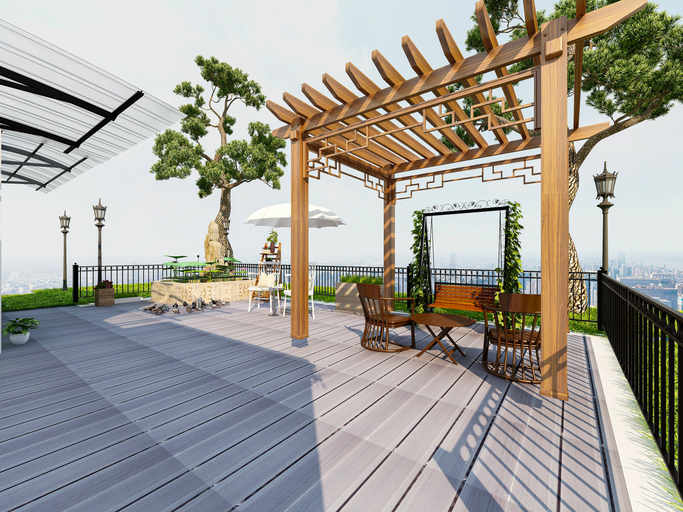
A WPC slat (this is commonly referred to as ไม้ระแนงเทียม WPC in Thai) can add warmth around stone and concrete garden features by introducing wood-like texture, softer visual lines and natural-looking contrast alongside harder surfaces. Concrete patios, rendered walls, stone planters and paved seating areas often create a beautifully modern foundation, but too much masonry can leave a garden feeling stark. Introducing slatted details breaks up those solid surfaces and brings a more relaxed character to the setting without taking away from its contemporary style.
Break Up Large Areas of Concrete
Concrete works brilliantly in modern gardens because it creates clean lines and provides a neutral backdrop. The challenge appears when several large concrete surfaces sit together.
Imagine a paved terrace bordered by a concrete wall. Adding vertical slats to one section immediately changes the visual rhythm. Instead of seeing one continuous hard surface, the eye moves between different textures.
There is no need to cover everything. A carefully positioned section can have more impact than completely cladding a wall, particularly when the original concrete remains visible around it.
Give Stone Seating a Softer Backdrop
Built-in stone benches can make excellent use of garden space, but they sometimes need a warmer element to feel inviting.
Slatted panels positioned behind the seating can create that contrast. Add outdoor cushions, a small table and surrounding plants, and a practical stone bench begins to resemble a deliberately designed relaxation area.
The vertical lines can also draw attention upwards, helping wider or lower seating arrangements feel more balanced within the landscape.
Create Contrast Around Raised Planters
Stone and concrete planters already introduce different heights into a garden. Slats can make these features even more noticeable without competing with the plants themselves.
Try positioning a slatted section behind a group of raised beds containing grasses, leafy plants or flowering shrubs. Green foliage against a timber-inspired background creates layers of colour and texture, while the masonry provides a strong base underneath.
For a more restrained look, repeat the slatted finish only in selected areas rather than around every planter.
Add Character to an Outdoor Cooking Area
Concrete counters and stone worktops are practical choices for outdoor kitchens because they create a substantial, permanent appearance. Yet an entirely grey cooking area can feel more functional than sociable.
Wood-look slatted detailing can be introduced on nearby walls, beneath suitable counter sections or around the surrounding entertainment area. This creates a visual distinction between preparation surfaces and decorative features.
Consider combining:
- Smooth concrete worktops with textured slatted details
- Pale paving with deeper wood-inspired tones
- Stone walls with vertical slat sections
- Architectural planting alongside structured surfaces
The result can feel contemporary without becoming cold.
Use Lighting to Highlight the Texture
Slatted surfaces become particularly interesting after sunset. Carefully positioned garden lighting can create alternating areas of light and shadow between the individual lines.
Rather than flooding the entire space with bright illumination, subtle lighting can emphasise texture around a stone wall, patio or seating corner. It gives the garden another layer of character when viewed from inside the home in the evening.
Let Hard and Soft Materials Work Together
A memorable garden rarely depends on one material. Stone and concrete provide structure, while greenery introduces life and slatted finishes bring warmth between the two. Thoughtful combinations can make patios, seating areas and landscaped corners feel connected rather than assembled from separate features. Homeowners planning exterior improvements can turn to VG-CNP for expertise in durable building solutions that balance practical performance with considered design.