
Kidney stones are one of the common conditions treated by urologists. They can cause excruciating pain and may also lead to recurrent urinary infections, kidney damage and significant disruption to work, family life and everyday activities.
Fortunately, advances in technology have transformed the way kidney stones are managed. Today, patients have access to a range of treatment options, including non-invasive shockwave therapy (extracorporeal shockwave lithotripsy, or ESWL), telescopic surgery using a ureteroscope and laser, and keyhole surgery known as percutaneous nephrolithotomy (PCNL).
Traditionally, there has been a trade-off between invasiveness and effectiveness. Less invasive treatments are generally well tolerated and associated with fewer side effects, but may leave behind residual stone fragments. These fragments can continue to cause symptoms or act as a seed for future stone growth. More invasive procedures tend to achieve higher stone clearance rates but are associated with a greater risk of complications, longer hospital stays and prolonged recovery.
Over the past decade, significant technological developments have helped bridge this gap. Modern high-definition digital ureteroscopes provide exceptional visualisation of the urinary tract, allowing surgeons to access and treat stones with remarkable precision. At the same time, advances in laser technology have enabled stones to be fragmented more efficiently, reducing treatment times and improving outcomes.
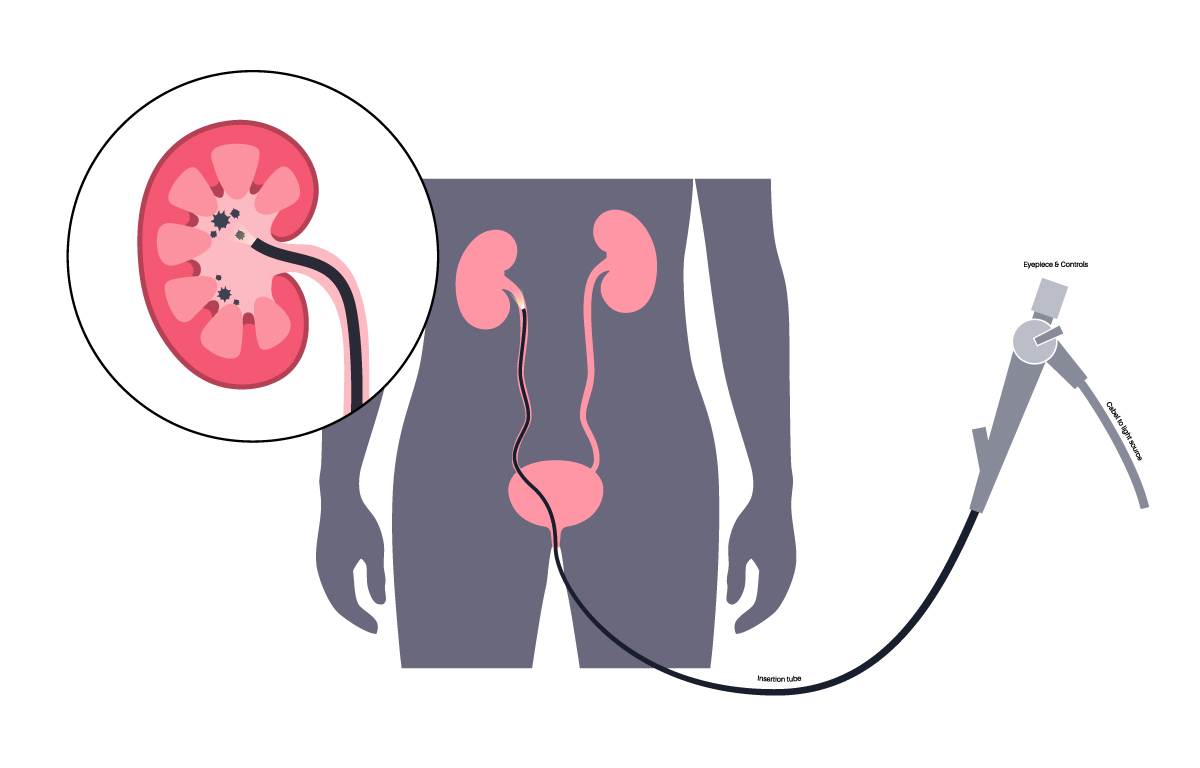
One of the more recent innovations is the development of suction-assisted ureteroscopic surgery using Flexible and Navigable Suction (FANS) access sheaths. These specialised sheaths are placed in the urinary tract, providing a channel for the ureteroscope to be passed through, allowing easy access in and out of the kidney. Importantly, these sheaths also enable suction during the procedure, allowing stone fragments and fine stone dust to be actively removed as treatment progresses.
For patients, this offers several important advantages. By removing fragments during surgery rather than leaving them behind to pass naturally, FANS can achieve higher stone-free rates, even for larger kidney stones that may previously have required more invasive procedures. As residual fragments are a recognised risk factor for future stone growth, improved stone clearance may also help reduce the likelihood of recurrence.
Suction-assisted surgery may improve safety as well. During conventional stone surgery, pressure can build up within the kidney, occasionally allowing bacteria or toxins to enter the bloodstream and increasing the risk of infection. By maintaining lower intrarenal pressures, suction-assisted techniques may reduce the risk of post-operative infection and sepsis.
Perhaps most importantly for patients, these procedures can usually be performed as day-case surgery.
Patients can return home the same day, recover quickly and experience minimal disruption to their normal lives. For people affected by kidney stones, these advances represent a major step forward. Treatment is becoming increasingly precise, less invasive and more effective, allowing more patients to achieve complete stone clearance with faster recovery and fewer complications than ever before.

Mr Karyee Chow, Consultant Urological Surgeon – performs ureteroscopic surgery with FANS at the Spire Manchester
Find out more at www.urologyclinics.co.uk
Contact Urology Clinics Manchester e: info@urologyclinics.co.uk