Orthodontic treatment is about far more than straight teeth. A healthy smile depends on the careful balance of tooth alignment, bite function, jaw development, and long-term stability. As tooth straightening with Invisalign becomes more and more common in the UK by general dentists, understanding the role of a Specialist Orthodontist has never been more important. Here, we look at why specialist orthodontic care matters and how it can help patients achieve the best possible outcome.
General Dentist vs Specialist Orthodontist Care
Both general dentists and specialist orthodontists are highly qualified dental professionals who play important roles in patient care. The key difference lies in the level and focus of specific orthodontic related training.
To become a Specialist Orthodontist, they must complete an extensive training pathway taking around 12 years. After becoming a general dentist, there is hospital training and a further three years of full-time specialist orthodontic training. An orthodontic specialist ONLY carries out orthodontic treatment and no other types of dental treatment such a fillings or crowns.
General dentists complete the same initial dental education, qualifying them to provide a wide range of dental treatments. Some dentists also choose to undertake basic additional training in clear aligner systems, such as Invisalign, enabling them to offer orthodontic treatment within general practice at a cheaper cost than a specialist.
What This Means in Reality
Treatment with an orthodontic specialist will always be more detailed from start to finish. The initial assessment is much more comprehensive, the attention to detail during treatment goes much further and also with all the extra skills and training, they have the ability to solve issues if teeth behave unusually and treatment doesn’t progress as it should be doing. The quality of the end result can also be significantly different.
Another important consideration is the range of treatment options available. While clear aligners can be an excellent solution for many patients, they are not suitable for every case. Specialist orthodontists are skilled in the full range of appliances, including fixed braces, lingual braces, palatal expanders, growth-modification appliances, and early interceptive preventive treatment for children to reduce the need for extractions in the future.
Having access to the full range of orthodontic techniques allows treatment to be tailored to each patient’s individual needs rather than being limited to a single treatment approach. Ultimately, this helps patients achieve the most appropriate, effective, and stable outcome for their smile.
Sumas story
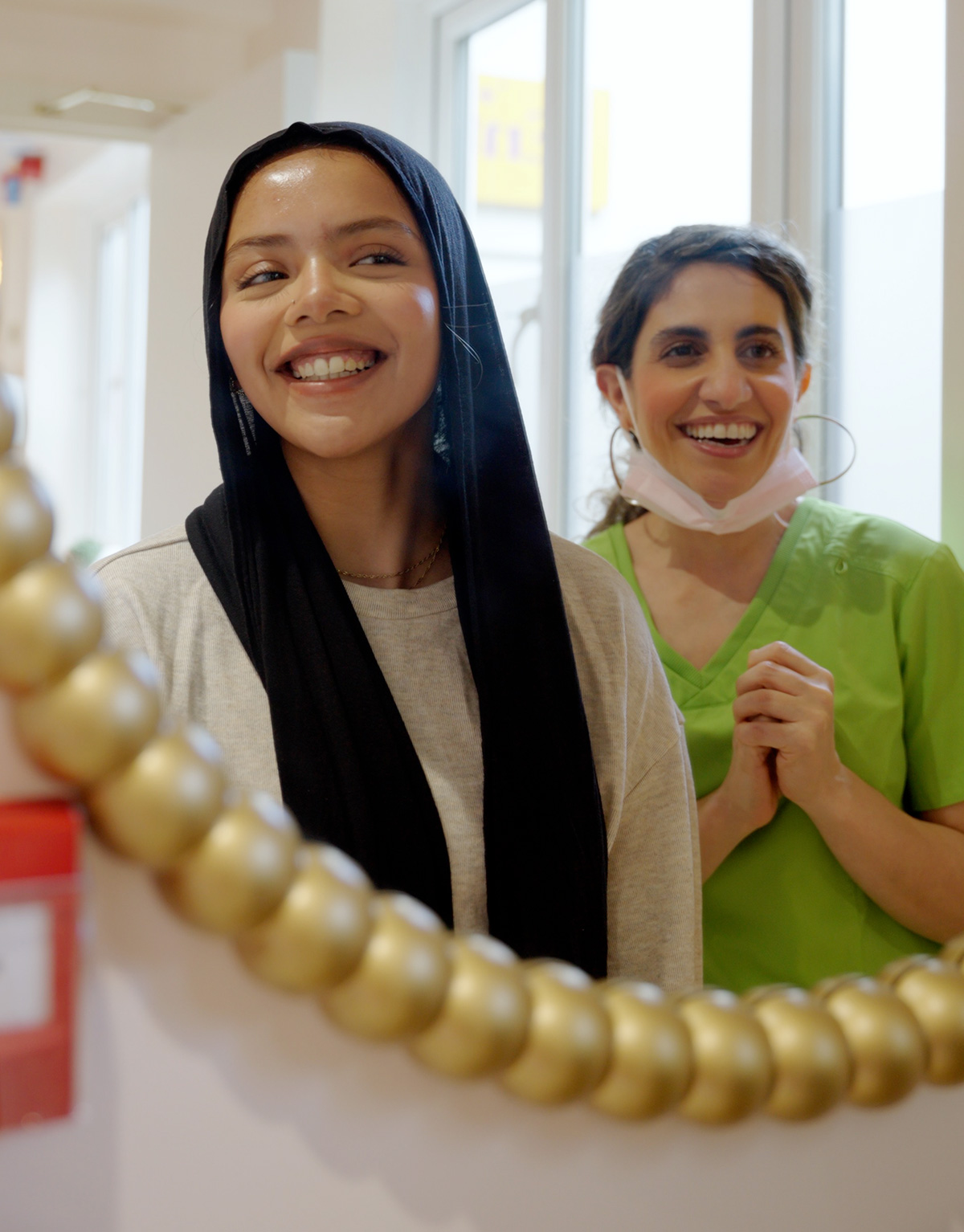
Suma joined us for her patient journey in August 2025 after starting her treatment with a general dentist in January 2024. Being in a position to have received treatment from a specialist orthodontist and also a general dentist with some orthodontic training Suma explains that orthodontic treatment with Dr Ayeh felt ‘completely different from when I was having braces with the dentist! There was so much more attention to detail and Ayeh was so so much more knowledgeable about my treatment’.
What advice did she give to anyone thinking about going to specialist vs dentist? ‘Go to a specialist! These are your teeth and part of your body and deserve the best trained person! It might be cheaper to go to a dentist but in the long run that might not be the best’

Why is Dr Ayeh different with her holistic approach?
Dr Ayeh is not only a highly skilled specialist orthodontist who has successfully treated hundreds of thousands of patients throughout her career. Having trained in the UK and internationally, she takes a more holistic and preventive approach to treatment.
Her philosophy is to provide the least invasive treatment possible, aiming to avoid extractions and surgical procedures whenever suitable alternatives are available. To maximise these opportunities, Dr Ayeh encourages early orthodontic assessment and treatment, often from around the age of 8, or once the first four front adult teeth have erupted in both the upper and lower jaws.
Early treatment can be highly beneficial because a child’s jawbones are still developing and are more responsive to guidance and expansion. This allows space to be created more easily for incoming teeth, helping to reduce the need for more complex treatment later in life. In adulthood, the bones have fully matured and become less adaptable, meaning that creating additional space may require more invasive procedures, including extractions or surgery.
What a consultation at Joyful looks like
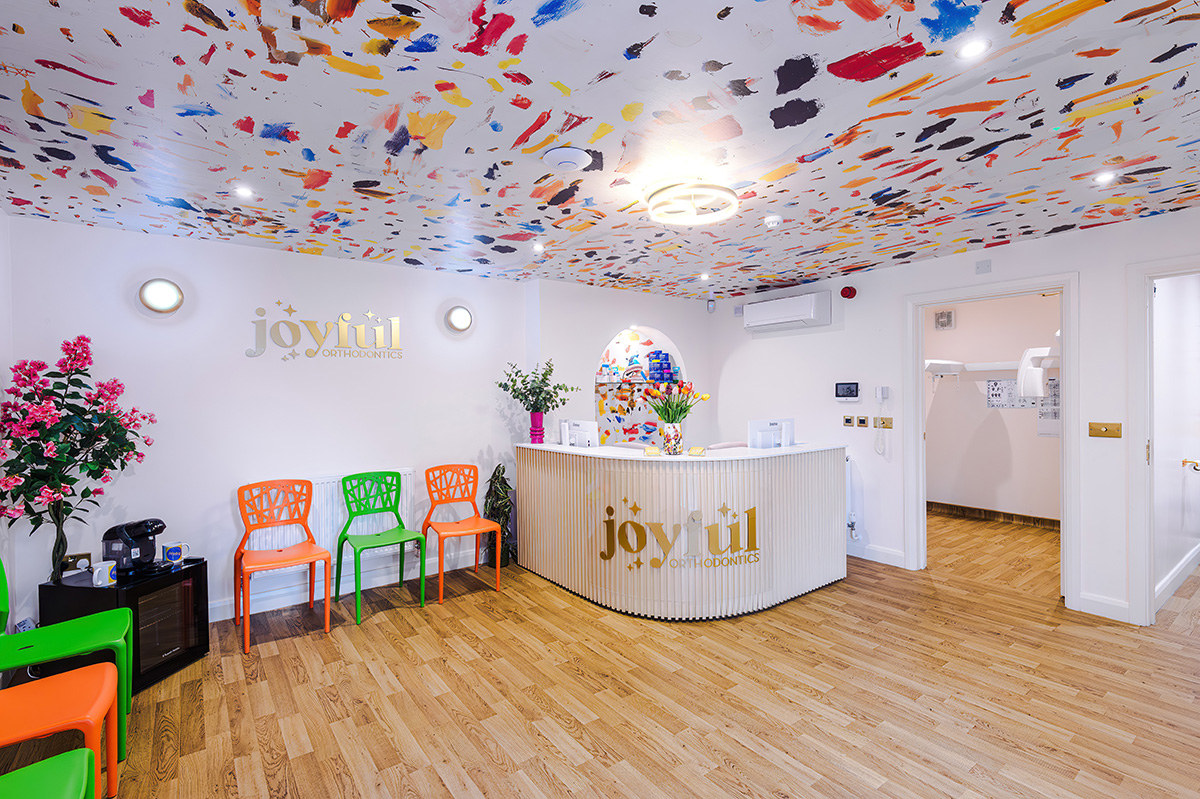
The initial consultation, carried out by Dr Ayeh herself is a comprehensive one hour long in-depth assessment of the patient as a person firstly to assess their goals, lifestyle and daily habits. This is all done in a beautiful setting that’s intentionally designed to build a warm, friendly and relaxed atmosphere.
Then there is an assessment of the teeth, gums, bite, jaws, how top and bottom teeth relate to each other, the position of the tongue and lips and breathing patterns. Finally, a full mouth scan is taken which is shared on a big screen making it easier to see and understand what is going on and what the options are for each individual patient to start their journey to a healthier, happier, joyful smile!
To book in for a consultation with us, visit our website www.joyfulortho.co.uk or give us a call and speak to one of our lovely team members on 0161 524 3710