
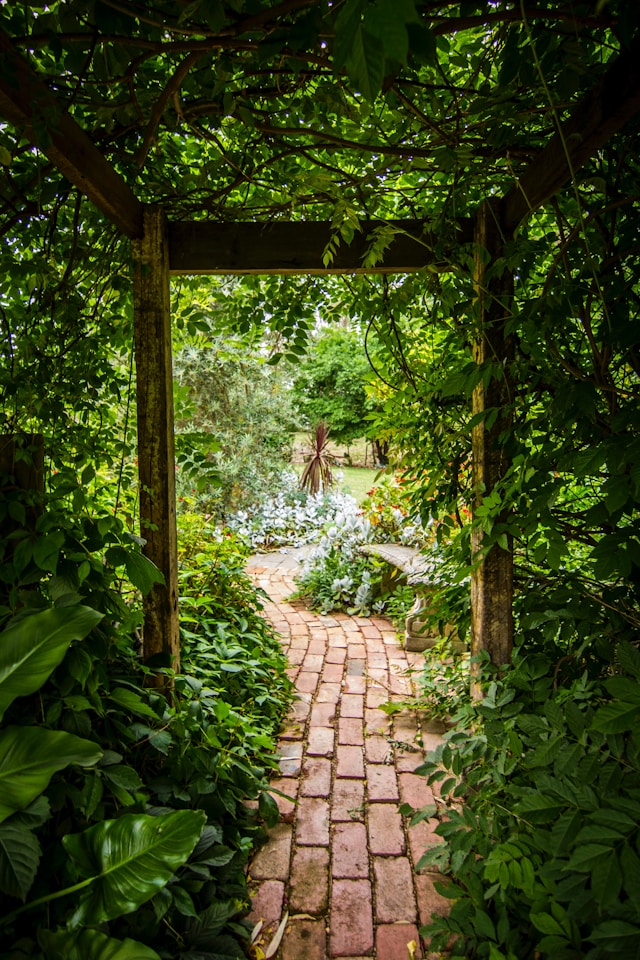
If you want more adaptive pathways in your garden, then this post is for you. We take a look at some of the practical and inspiring methods you can use to create pathways that seem idyllic or turn your garden into a wonderland. Here’s everything you need to know.
Plan your garden pathway with flow in mind
You’ll want to start by planning your garden pathway with flow in mind. Think about how you’re going to get from one location to another. For example, you might have a path that runs from your driveway to your front door. You could also have a path that takes you on a route through all of your raised beds in your garden. Think carefully about the drainage and slope of the path. Make sure that it feels natural. Also add gentle curves in traditional gardens to make everything feel more relaxed and organic.
Choose the right materials
Next, you’ll want to think about the types of materials that you’ll use. These can affect the mood and design of the pathway.
For example, if you’re going for something simple, you might opt for mulch or wood chips. These are affordable, soft, and natural and a great option in heavily wooded areas. You could also use pea gravel or regular gravel. Rock offers excellent drainage and also provides a casual, rustic look that can be very attractive for some people. It’s low maintenance and doesn’t require a lot of work.
For something more organic and warm, you might want to consider wood planks with garden sleepers. These are fantastic if you want to create pathways through your vegetable patch or a raised boardwalk.
Use attractive pathway styles
Next, you’ll want to think about attractive pathway styles that could suit your garden’s theme.
- For example, many people like stepping stone paths, which involve scattering irregular flagstones or concrete pavers on the floor and hopscotching from one to the next.
- You could also use a brick herringbone pattern on the ground. These mimic the herringbone patterns you sometimes see in grand hardwood floors.
- Finally, you could look for pollinator-friendly paths. These are wide enough for walking but also are bordered by nectar-rich flowers, which provide sustenance to bees and other insects.
How to build a basic garden path
Building a basic garden path is easier than you might think.
- Plan and mark the route and decide where it’s going to go.
- Prepare the base and make sure that you provide at least 4 to 7 inches of depth for the aggregate to settle into.
- Add the base layer with 2 to 4 in of gravel so you have sufficient drainage.
- Install the edging, including metal brick or stone elements that will mark the edges of your path.
- Lay the surface using the material of your choice, either flagstones, gravel, mulch, or another material.
- Finish the route with solar pathway lights, border flowers, and other elements you feel are important.
So there you have it, the ultimate guide to attractive garden pathways.
Image: Unsplash – CC0 License