
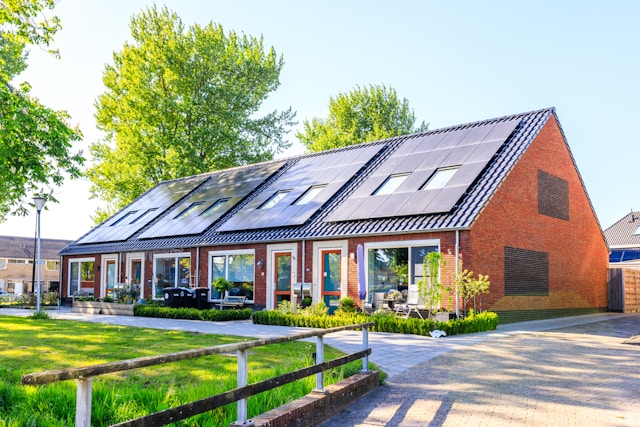
Imagine your home humming along smoothly, lights on and appliances running, even when the neighborhood goes dark during a storm. This isn’t a scene from a futuristic movie; it’s the reality of home energy independence. It’s all about making your home more resilient and self-sufficient by generating and storing your own electricity, so you don’t have to rely so much on the traditional power grid.
What is Home Energy Independence?
Taking control of your home’s power supply is what energy independence is all about. For most folks, this doesn’t mean completely cutting ties with the utility company. Instead, you’re just adding your own power source to supplement the grid. Think of it like a hybrid car. You generate electricity right at home, usually with solar panels, use what you need, and save any extra for later. This process gets even smoother with solar batteries. You’ll still have the grid there as a backup, but you won’t depend on it nearly as much for your everyday needs. This setup gives you flexibility, security, and a bigger say in how your home gets its power.
Benefits Beyond Saving Money
While saving money on your monthly electricity bill is a huge plus, energy independence offers so much more. One of the biggest benefits is how resilient your home becomes. When bad weather or grid maintenance causes a power outage, a home with its own energy storage can keep essential systems running. This could mean your fridge stays cold, your lights stay on, and important medical devices keep working.
Beyond keeping your own home secure, generating your own clean energy reduces your household’s carbon footprint. You’re actively joining the movement towards a more sustainable way of living, which is a powerful reason for many homeowners. It’s a real, tangible way to make a positive impact on the environment, right from your own rooftop.
Solar Power as a Foundation
For almost every independent home energy system, solar panels are where it all begins. These panels are like the engine of your personal power plant. They grab sunlight and turn it into direct current (DC) electricity. Then, an inverter changes this into alternating current (AC) electricity, which is the kind that powers all the appliances and electronics in your home.
When the sun is out, the electricity your panels make can power your home directly. If you’re making more power than you’re using, that extra energy has to go somewhere. Without a storage system, it usually just goes back to the grid, but that won’t help you when the sun sets. That’s why storage is the other crucial part of the puzzle.
The Role of Energy Storage
Solar panels are amazing, but they only work during the day. To truly be energy independent, you need a way to use that solar power at night or on cloudy days. That’s where solar batteries come in. These systems store the extra energy your panels create during the sunniest hours.
When evening rolls around or the power goes out, your home automatically switches to drawing power from the battery. Instead of buying electricity from the utility company at expensive peak rates, you’re using the free energy you stored earlier. A battery that’s the right size can power your home all night, making sure you get the most out of your solar investment and stay powered up even when the grid fails.
Planning Your Independent Home
Ready to take the first step? Planning is important. Before you start looking at panels or batteries, you need a clear idea of how much energy you actually use.
- Check Your Usage: Start by looking at your old electricity bills. This will show you how much energy you use each month and when you use it. This information helps you figure out how big your system needs to be. You can also do a home energy audit to see where you can cut back on energy first.
- Think About Your Goals: Are you mainly trying to lower your bills, have backup power for outages, or be as green as possible? Your main goal will guide you in choosing the right type and size of system.
- Plan for the Future: Are you thinking about getting an electric car soon? Do you work from home more often now? Don’t forget to include any future changes that might make you use more electricity. Planning for these needs now can save you from having to upgrade your system later.
Taking charge of your home’s energy is a big step towards a more secure and sustainable life. Understanding what you use and exploring your options helps you create a home that’s ready for anything.
Image Credit: Unsplash