
Cruising looks very different today from the way it did twenty years ago. For many, luxury cruising isn’t about taking bigger ships with endless onboard entertainment. It’s about waking up somewhere interesting and stepping ashore without airport queues, long transfers, or busy roads.
One journey might follow a river through Portugal’s wine country. Another could spend days moving between islands in the Indian Ocean or sailing beneath towering cliffs in Norway. The ships are part of the appeal, of course, but the destinations leave the strongest impression.
Sailing the Douro Valley: Portugal’s Most Romantic River Cruise
The Douro Valley reveals itself quietly. Leaving Porto behind, the scenery changes surprisingly quickly once the urban outskirts disappear. Hills start rising above the river, vineyards spread across the slopes, and small villages appear between olive groves and terraced fields.
Before boarding, many passengers spend a day exploring Porto itself. The streets around Ribeira remain busy throughout the afternoon, while nearby Rua das Flores fills with musicians, market stalls and people moving between cafés and shops. The upper level of Dom Luís I Bridge is worth crossing on foot, particularly near sunset when boats drift beneath the old city.
Among the most celebrated Douro River cruises are voyages that spend several days navigating the section between Peso da Régua and Barca d’Alva, where many of the valley’s historic wine estates are located. Excursions often include visits to traditional quintas, cellar tours and tastings overlooking the vineyards. Pinhão regularly stands out. Its railway station is covered with azulejo panels depicting scenes like grape harvesting, while the surrounding hillsides are packed with vines that seem to climb almost vertically above the river. During harvest season, tractors and vineyard workers are a common sight along the narrow valley roads.
The Danube in Luxury: Vienna, Budapest and Beyond
The Danube passes through some of Europe’s most recognisable cities, yet many of the smaller stops along the river are equally memorable.
Vienna remains one of the highlights. From the riverfront, it’s easy to reach Stephansplatz, where horse-drawn carriages still circle St Stephen’s Cathedral. Naschmarkt draws a mix of locals buying groceries and visitors browsing spice stalls, bakeries and produce stands. A walk along Kärntner Strasse quickly reveals why the city remains such a popular stop on luxury river itineraries.
Budapest feels particularly impressive when arriving by ship. The Parliament Building dominates the riverbank, especially after dark when it becomes illuminated. Around the Great Market Hall, traders sell paprika, pickles and Hungarian sausages beneath the vast steel roof. Just beyond the market, pedestrians fill Váci Street throughout much of the day.
Further upstream, places such as Melk and Dürnstein provide a completely different atmosphere. Dürnstein’s narrow lanes wind between pastel-coloured buildings, and the ruined castle above the town requires a fairly steep climb. Comfortable shoes help here.
Island-Hopping the Seychelles by Sea: Paradise Found
The Seychelles covers a vast area, which explains why cruising works so well here. Travelling between islands by ship removes much of the logistical hassles of arranging ferries, domestic flights and accommodation across multiple islands.
Most voyages begin on Mahé. Victoria, one of the world’s smallest capitals, is compact enough to explore on foot. Around Sir Selwyn Selwyn-Clarke Market, fishmongers display the morning’s catch while nearby stalls sell cinnamon, nutmeg, vanilla and tropical fruit. The clock tower at the centre of town remains one of the most photographed landmarks in the country.
There is a growing interest in booking extraordinary Seychelles island cruises because these itineraries reach islands that many visitors never see. Cruise schedules often include nature-rich locations such as Aride Island and Cousin Island, both important wildlife reserves with restricted visitor numbers. Smaller expedition vessels can also anchor off Félicité, Silhouette and Curieuse, where passengers can step ashore for guided walks, snorkelling trips and wildlife encounters. Curieuse’s giant tortoises often wander freely near walking paths, while Aride supports large populations of nesting seabirds. Access to these protected islands is one of the strongest reasons people choose this style of cruise.
A Mediterranean Superyacht Experience: Italy, Greece and Croatia
Superyacht cruising changes the Mediterranean experience considerably. Smaller vessels spend less time anchored far offshore and more time close to town centres, marinas and historic waterfronts.
Along Italy’s Amalfi Coast, yachts frequently stop near Positano. From the water, the houses appear stacked on top of one another across the hillside. Steep stairways lead through the town, passing boutiques, churches and small squares before reaching higher viewpoints above the beach.
Greek islands continue to attract yacht owners and charter guests, though places like Symi, Patmos and Folegandros often feel more appealing than the busiest ports. Early mornings around the harbours tend to be particularly active as fishing boats return and shopkeepers prepare for the day ahead.
Croatia has become a major fixture on luxury yacht itineraries. Dubrovnik’s city walls remain impressive, but many passengers enjoy Korčula and Hvar just as much. Around Hvar Town, stone lanes branch from the waterfront promenade and lead towards old monasteries, hidden courtyards and small squares where residents still gather during the evening.
Norway’s Fjords by Cruise Ship: Dramatic Scenery and Arctic Light
Norway’s coastline was made for cruising. Roads often follow indirect routes through mountains and around waterways, while ships can travel directly into the heart of the fjords.
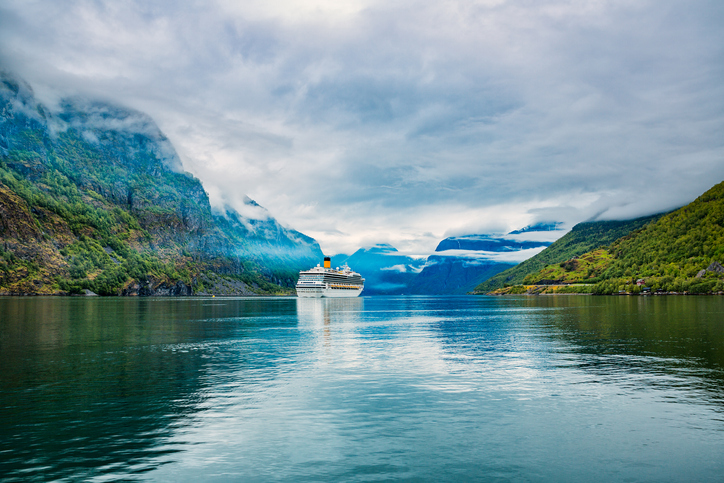
Geirangerfjord remains one of the standout locations. Arriving early in the morning, passengers often find low cloud hanging between the cliffs while waterfalls tumble down the rock faces. A few isolated farms remain visible high above the waterline, occupying locations that seem difficult to reach even today.
Bergen is a common embarkation point. Bryggen’s wooden buildings stretch along the harbour, and the nearby Fish Market continues to attract a steady flow of customers throughout the day. Taking the Fløibanen funicular up Mount Fløyen provides a good perspective over the city, harbour and surrounding islands.
Further north, the scenery becomes noticeably wilder. Around the Lofoten Islands, mountains rise sharply from the sea and fishing villages such as Reine and Henningsvær remain active working communities. In Tromsø, summer daylight extends late into the evening. During winter sailings, passengers often gather on open decks watching the sky for signs of the northern lights.
Which luxury cruise is worth booking this year?
That depends entirely on the type of experience one enjoys the most. Some people are happiest spending a week moving through vineyard-covered valleys with a glass of local wine in hand. Others would choose remote islands, historic capitals, coastal villages or Norway’s dramatic fjord landscapes.
What makes these cruises memorable isn’t simply the level of comfort onboard. It’s the access they provide. Ships can arrive directly beside old town centres, isolated islands and remote stretches of coastline that many visitors never reach. Long after the details of a suite or dining room have faded, those arrivals tend to be the moments people remember.