For many parents, watching a child build a wobbly tower of wooden blocks or host a make-believe tea party looks like simple entertainment. However, these playful moments are actually complex cognitive workouts. In the first five years of life, a child’s brain develops faster than at any other time. During this crucial window of neuroplasticity, play-based education emerges as one of the most effective ways to nurture a lifelong love of learning. Rather than relying on rigid, traditional instruction, this approach allows young minds to explore, experiment, and understand the world around them through hands-on, meaningful experiences.
The Science Behind Learning Through Play
Play is not a break from learning. It is the very mechanism through which young children learn best. When educators intentionally design activities that spark curiosity, they are laying the groundwork for critical thinking, language development, and emotional intelligence. The evidence supporting this approach is overwhelming. According to research highlighted by Purdue Global, organisations like the Society for Research in Child Development note that adult facilitation in guided play helps children learn significantly more than they could on their own.
Similarly, the American Academy of Pediatrics affirms that pretend play builds essential communication skills, creativity, and problem-solving abilities. Children who engage in these environments develop better self-regulation and find it easier to adapt to new social situations. When a child creates a scenario in the sandbox, they are learning the basics of physics. When they negotiate who gets to be the doctor in a pretend hospital, they are developing advanced social and emotional skills.
What to Look for in an Early Education Setting
Understanding the value of play is one thing, but finding an early learning centre that genuinely applies these methodologies is another. Parents should look for environments that prioritise sensory experiences and tailored developmental programs over rote memorisation. For example, if you are evaluating a Merryland daycare, you should ask the educators how they balance unstructured free play with intentional, guided activities.
When touring potential early childhood settings, look for specific indicators that a centre truly values and implements a play-based philosophy:
- Open-ended materials: Classrooms should feature items like building blocks, clay, and fabric that encourage imaginative use rather than single-purpose toys that only have one way to be played with.
- Child-led exploration: Skilled educators observe what naturally interests the children and build rich learning opportunities around those specific topics.
- Sensory-rich environments: Access to sand, water, and natural outdoor elements helps children develop fine motor skills, spatial awareness, and a strong connection to nature.
- Focus on socialisation: Spaces should be carefully set up to encourage group activities, helping young learners figure out how to share, negotiate, and collaborate with their peers.
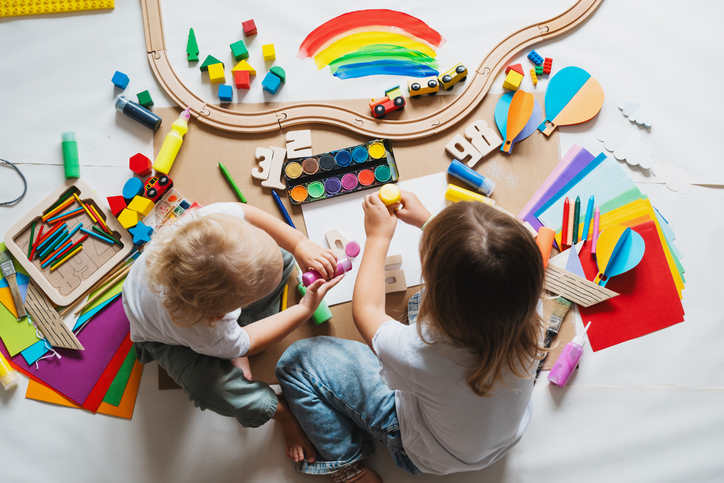
- Process over product: The focus should be on the experience of creating (like painting a picture or building a fort) rather than the final outcome looking perfect.
Supporting Educational Play at Home
The profound benefits of play-based learning do not have to stop at the classroom door. Parents can easily extend these educational philosophies into their own living rooms and backyards. Often, the most challenging behavioural phases are actually important periods of rapid cognitive growth. When children test boundaries or struggle to communicate big feelings, play becomes a vital tool for emotional regulation and understanding.
If you are navigating the early toddler years, you can actively support your child’s emotional growth and give your child the best start in life by encouraging them to discover new experiences and play freely. For instance, role-playing with stuffed animals can help a toddler process complex emotions and understand empathy. Setting up a dedicated messy play zone allows them to release energy while safely exploring different textures and sensations.
Instead of correcting every mistake your child makes during playtime, try to let them lead the activity. Ask open-ended questions like, “What do you think will happen if we mix these two colours together?” or, “How can we build a stronger bridge for the toy cars?” This simple shift in communication empowers them to think critically, builds their self-confidence, and makes learning an exciting adventure rather than a chore.
Nurturing Lifelong Learners
Setting a solid foundation for your child’s future does not require flashcards or highly structured academic schedules. By embracing play-based education, both in professional early learning environments and at home, parents can provide their children with the exact tools they need to thrive. These early, joyful experiences shape resilient, curious, and capable individuals who are well-prepared to tackle the challenges of formal schooling and all the adventures that come after.