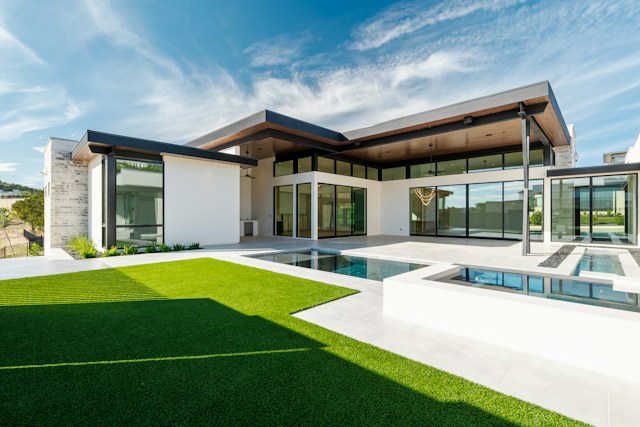
Minimalist hardscaping is giving suburban yards a calmer, more polished identity. Instead of filling every corner with decorative features, homeowners are using simple surfaces, restrained colors and carefully placed greenery to make outdoor areas feel larger and easier to maintain. The best designs still feel welcoming because they balance crisp construction with natural texture. They also support everyday routines, from parking and entertaining to gardening and quiet evenings outside.
The Shift Toward Clean Geometric Lines
Straight paths, rectangular planting beds and square pavers create an orderly framework that suits many suburban homes. These shapes can visually widen a narrow side yard or guide attention toward an entry, patio or garden feature. A path measuring about 3 to 4 feet wide, for example, generally gives one person comfortable access without consuming too much planting space.
Start by identifying the lines already present in your home’s facade, windows and roof. Extending one or two of those lines into the yard produces a connected look. You can also review several popular landscaping styles before deciding how sharply geometric the finished space should feel. Limit the layout to a few repeated shapes so the design remains clear without becoming rigid.
Sleek Pavement Styles and Neutral Tones
Large-format paving and continuous concrete surfaces reduce visual clutter because they create fewer seams. Warm gray, sand, charcoal and soft beige work well with brick, siding and rendered exteriors. One main tone paired with a slightly darker border is often enough to define the space.
For high-use areas, function should guide the finish. Homeowners considering new concrete driveways should account for drainage, vehicle movement and the transition to nearby paths before choosing color or texture. A lightly textured finish can improve grip while preserving a streamlined appearance.
Collect physical samples and view them outdoors during the morning and late afternoon. Sunlight can make a cool gray surface appear blue, while shaded beige may look darker than expected. Keeping paving materials to two types across the property also helps the front and back yards feel connected.
Integrating Native Foliage Around Solid Stone
Plants soften the hard edges of stone and concrete, but minimalist gardens need deliberate spacing. Repeating three to five plant varieties creates rhythm without producing a crowded border. Place low grasses beside paths, rounded shrubs near corners and one taller specimen where the yard needs height or privacy.
Native foliage is especially useful because locally suited plants often need less intervention once established. Check mature dimensions before planting, then leave enough room to prevent branches from covering paths or trapping moisture against walls. Guidance on modern residential design also shows how restrained plant palettes can complement strong architectural materials.
Use gravel or mulch between young plants while they fill out. This controls weeds, keeps soil away from paved surfaces and makes each plant’s form more visible. Repetition will provide more impact than a collection of unrelated species.
Creating Purposeful Multi-Use Zones
A successful suburban yard earns its space by supporting more than one activity. A paved area near the house might accommodate outdoor dining during warm months, then provide an open play or exercise zone when the furniture moves aside. A broad front path can welcome visitors while also offering easy access for bins, bicycles and garden equipment. Thoughtful planning of a modern outdoor entertaining area can help homeowners balance practical everyday use with a polished, cohesive design.
Plan each zone around realistic measurements. Allow roughly 3 feet behind dining chairs so people can move comfortably and keep permanent planters outside main walking routes. Low retaining edges may double as occasional seating if their height and surface are suitable.
Leave some flexibility in the finished arrangement. Movable pots, compact furniture and restrained lighting can change how an area works without requiring new construction. When every line has a purpose and every plant has room to mature, the yard retains its clean character through daily use, changing seasons and future household needs.
Image Credit: Unsplash