
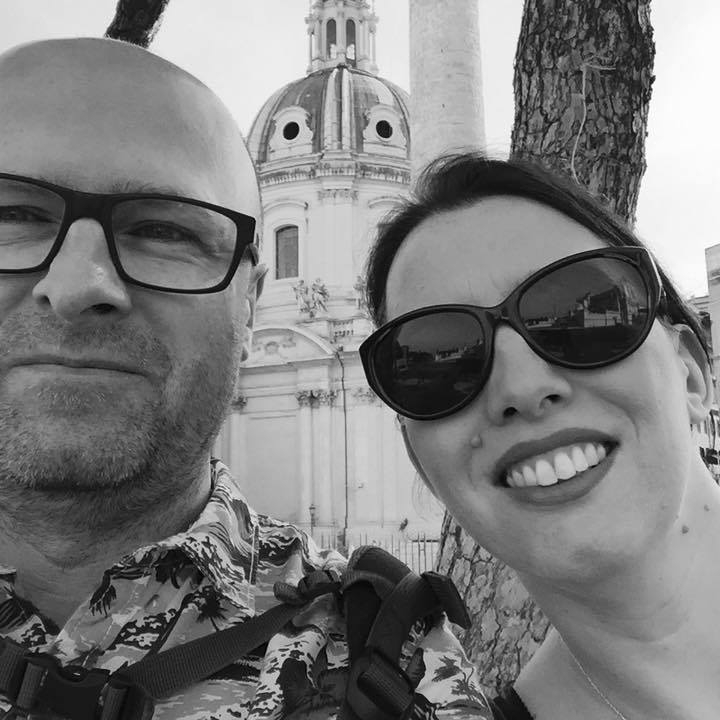
A Manchester widow whose husband died suddenly after suffering a cardiac arrest is sharing her story as part of The Widowed Collective’s new campaign for International Widows Day. Natalie Bolton says her family’s lives changed forever in the early hours of Mother’s Day 2021 when husband Jonathan collapsed at home without warning, leaving her to perform CPR while their daughters watched helplessly.
Natalie Bolton, 49, from Manchester, met Jonathan in 1998 and married him in 2002. Together they built a happy family life and welcomed twin daughters Amelia and Isobel in 2007.
Jonathan was a devoted husband and father who adored family life. Natalie says there was absolutely nothing to suggest that the ordinary Saturday they spent together in March 2021 would be the final full day of his life.
On the evening before Mother’s Day, Jonathan mentioned feeling slightly under the weather and decided to go to bed early while Natalie and the girls stayed downstairs watching television.
Natalie said: “It was completely normal. Jonathan said he wasn’t feeling great and went upstairs for an early night, but there was absolutely nothing to suggest anything serious was wrong. If somebody had told me that was the last evening we’d ever spend together as a family, I simply wouldn’t have believed them.”
At around 4am on Mother’s Day, Natalie woke to the sound of Jonathan struggling to breathe. Within moments she was on the phone to 999 operators and being talked through CPR instructions while desperately trying to save her husband’s life.
As she fought to keep Jonathan alive, their teenage daughters were woken and witnessed the terrifying scenes unfolding inside the family home.
Natalie said: “One minute I was asleep and the next I was performing CPR on my husband while a 999 operator talked me through what to do. The girls came out because they could hear what was happening. No parent ever wants their children to see something like that. I just remember thinking I had to keep going, I couldn’t stop, I had to keep trying.”
Paramedics and doctors rushed to the property and spent hours fighting to save Jonathan’s life. Despite their efforts, he died later that day aged 54. A subsequent post-mortem confirmed he had suffered a sudden cardiac arrest.
Natalie said: “There were no warning signs, no diagnosis and no indication that anything like this was about to happen. One minute we were an ordinary family looking forward to Mother’s Day and the next my husband was fighting for his life. He was only 54-years-old, it completely shattered our world.”
In the weeks and months that followed, Natalie found herself trying to cope not only with the loss of her husband, but with the trauma of witnessing his death while supporting two teenage daughters through the loss of their father. She later received treatment for PTSD after experiencing panic attacks, flashbacks and severe anxiety linked to the events of that night.
Natalie said: “People expect grief to be sadness, but nobody prepares you for the trauma that can come with it. I wasn’t just grieving Jonathan, I was reliving those final hours over and over again. At the same time I was trying to help two teenage girls navigate the loss of their dad while somehow keeping life moving forward. There were days when simply getting through the next hour felt impossible.”
As time passed, Natalie began connecting with other widows and widowers and quickly realised many were facing similar challenges long after the immediate aftermath of bereavement.
Natalie said: “For a long time I thought my job was simply to keep going for the girls. Every morning I got up, got them where they needed to be, and dealt with whatever was in front of us because there wasn’t another option.
“What nobody tells you is how exhausting that becomes. You’re trying to be a parent, deal with practical things, make important decisions and function normally, all whilst carrying something that has completely changed your world.
“I spent a long time trying to get back to the person I was before Jonathan died. Eventually I realised that person doesn’t exist anymore. What happened changed all of us.
“Life is still good, there is still happiness and laughter. But it isn’t the life we thought we were going to have and learning to make peace with that has probably been one of the biggest challenges of all.”
Those experiences ultimately led Natalie to help establish The Widowed Collective, a peer-support organisation providing free support, guidance and community for widows and widowers across the UK. Now, as co-founder of the organisation, she is sharing her story publicly as part of The Widowed Collective’s #WidowedAndForgotten campaign, launched to mark International Widows Day on 23rd June.
The campaign aims to shine a light on the hidden loneliness, isolation and lack of understanding experienced by many widows and widowers long after the funeral has ended.
Natalie said: “When Jonathan died, I found myself searching for people who genuinely understood what life looked like after losing a partner. That’s what eventually led to The Widowed Collective.
“We created it because widowhood is still hugely misunderstood. People see the funeral, but they don’t see the months and years afterwards when many people are still struggling and feeling incredibly alone.
“The purpose of #WidowedAndForgotten is to start more honest conversations about grief, challenge some of the misconceptions surrounding widowhood, and make sure people know there is support available. Nobody should have to navigate something this life-changing on their own.”
The Widowed Collective provides free peer-to-peer support for people who have lost a life partner. Through its online community, practical guidance, events and lived-experience support network, the organisation helps widows and widowers navigate life after loss and find connection with others who understand.
For more information about the #WidowedAndForgotten campaign, or to join The Widowed Collective for free, visit www.TheWidowedCollective.com