
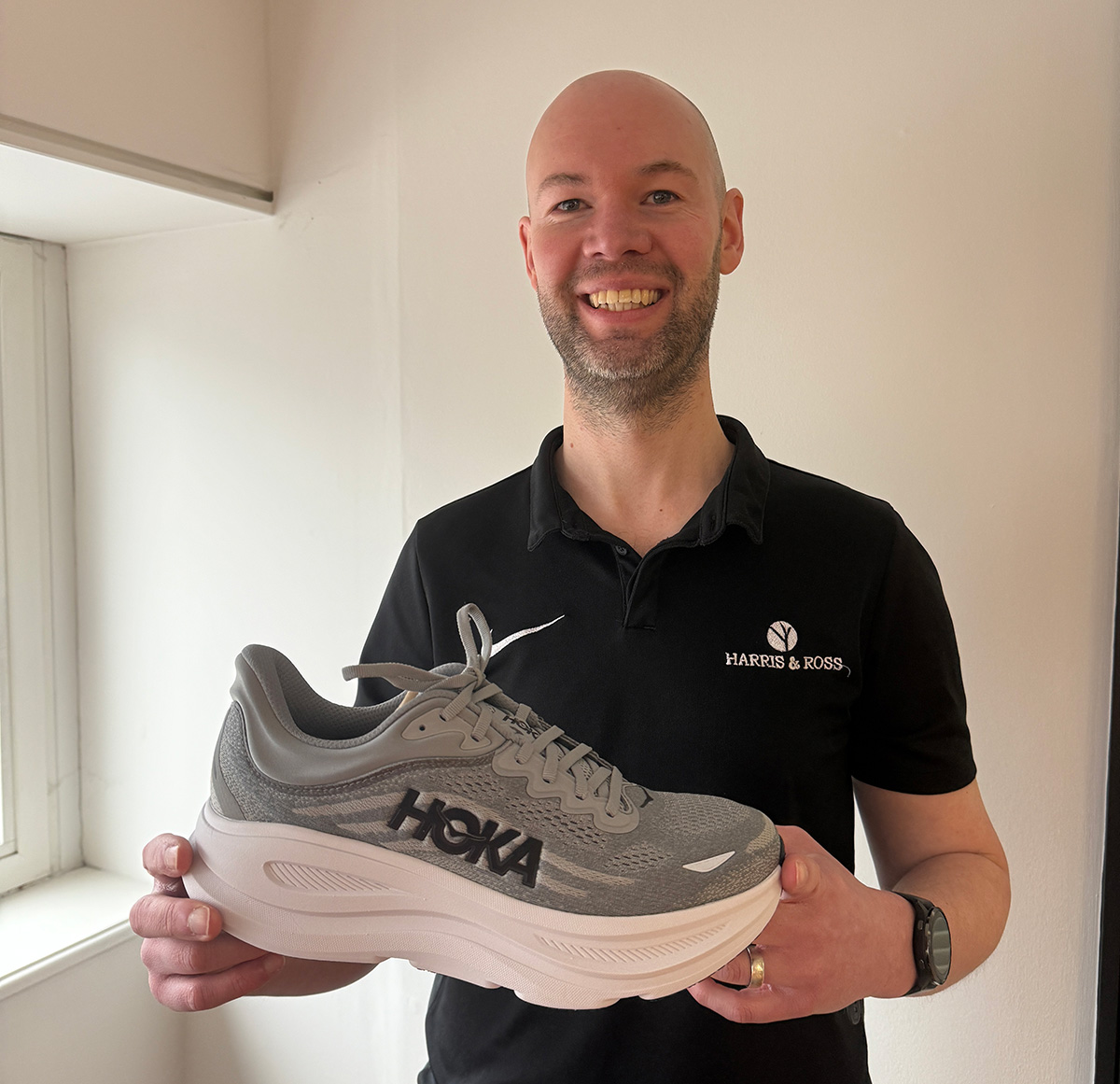
If you’ve spent any time around running recently, you’ve probably heard people talking about “super shoes.” The London Marathon wasn’t just won this year—it was redefined. Records lay shattered in the wake of the ‘Adizero Adios Pro Evo 3’, the latest ‘super shoe’ to prove that the boundary between human potential and engineering is blurring. But what actually are they and do they really make you faster?
What is a “super shoe”?
A super shoe is a type of high-tech running shoe designed to help you run more efficiently. They usually have three key features: a carbon fibre plate inside the shoe, a thick, soft, springy foam sole and a curved shape that helps roll your foot forward. Together, these create a kind of “spring effect” when you run. The foam compresses when your foot hits the ground, and the plate helps push that energy back into your stride. In simple terms: they’re designed to make running feel easier and faster.
Why are they so popular?
Super shoes exploded in popularity after elite runners started breaking records while wearing them. Since around 2020, many world records from 5K to marathon have been set in these shoes and even everyday runners have noticed they could run faster or feel less tired. There’s also a psychological factor: they feel bouncy and responsive and they make hard runs feel more manageable. And honestly, if something might make you faster, most runners are willing to try it.
What do they claim to do?
The main claim is simple: they improve your running efficiency. More specifically, research shows they can:
• Reduce how much oxygen you need to run at a given pace
• Lower how hard the run feels
• Help you maintain speed for longer
Studies suggest improvements in efficiency of around 3–4%, which is actually huge in endurance sports. It might not sound like much—but over a marathon, it can mean several minutes faster.
What are the real benefits?
1. You can run faster (or the same speed more easily)
This is the biggest and most proven benefit. The shoes help you use less energy and maintain pace with less
effort.
2. You may feel less fatigued
Some studies show a lower heart rate, lower perceived effort and less muscle soreness. This can make hard sessions feel easier and your recovery quicker.
3. They can reduce stress in some areas
There’s evidence that they may reduce load on certain parts of the body.
4. They allow harder training
Because running feels easier, people often train more, and run faster more often – part of why they’ve become so widespread.
So, what’s the catch?
Here’s where things get more complicated. Super shoes don’t just reduce stress—they change how your body functions.
1. They change your running mechanics
The stiff plate and soft foam alter how your body absorbs force. Instead of
just reducing impact, they shift stress around your body and change how joints and muscles work. Scientists are still figuring out exactly how—but it’s clear your body reacts differently in them.
2. Possible increase in certain injuries
The strongest evidence so far links super shoes to bone stress injuries in the foot. Researchers have reported cases of stress fractures (especially in the midfoot/navicular bone) in runners using these shoes. This might be happening because the stiff plate reduces flexibility and forces may become more concentrated in specific areas.
3. They may shift problems higher up the body
Even though direct evidence is limited, scientists think that less work at the ankle equates to more work at the knee and hip, which could in turn affect the hip muscles, pelvis and lower back.
4. They can weaken certain muscles (possibly?)
Because the shoe does more of the work, the thinking is that your foot and calf muscles may do less and that over time, this could lead to weakness and increased injury risk when switching shoes.
5. They can encourage overtraining
This is a big one. Because you feel better, you might run more than your body is ready for and push harder, more often – we know that this can increase injury risk, especially if training increases too quickly.
6. Stability issues
Super shoes are tall and soft which can make them less stable on corners and much less suitable for uneven ground.
So… are super shoes good or bad?
The honest answer is: They’re both!
Good:
• Proven to improve performance
• Make running feel easier
• Help many runners train harder
Not so good:
• Change how your body moves
• May increase risk of certain injuries
• Long-term effects are still unknown
The most important takeaway is that ‘Super Shoes’ don’t simply “protect” you—they redistribute stress around your body. That means that some injuries may become less common, but critically others may become more common.
They can make you faster and more efficient, but they also:
• Change your biomechanics
• Require adaptation
• Should be used thoughtfully
For most runners, the safest approach is:
• Use them for races or key sessions
• Don’t rely on them for every run
• Build up gradually
To book in with Ollie at our Wilmslow clinic, please go online, or give us a call on 0161 832 9000.
Harris & Ross have clinics in Manchester City Centre, Wilmslow, Altrincham and Wigan. You can book in with any of their physios at any location, online or by calling 0161 832 9000.