A bathroom can feel fresh for decades when its permanent features are calm, practical and easy to maintain. Trend-led colours and decorative details still have a place, but they work best in items that are simple to replace. The tiles, fittings and fixed glass should provide a restrained backdrop.
This approach also reduces waste and makes future updates less disruptive. Instead of renovating the whole room when tastes change, you can refresh towels, lighting or accessories while leaving the expensive elements untouched.
Neutral Foundations Outlast Trends
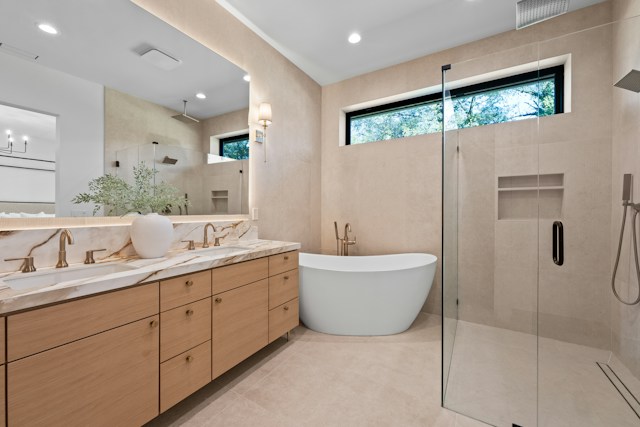
Start with a limited palette of warm white, soft grey, sand or pale stone. These shades reflect light and sit comfortably beside changing accent colours. For a small bathroom, using a similar tone across the floor and walls can also make boundaries feel less obvious.
Neutral doesn’t need to look flat. Introduce variation through texture, such as matt floor tiles, lightly veined stone or fluted cabinetry. The best timeless bathroom ideas often combine simple colours with subtle material differences.
Keep stronger shades to paint, towels and artwork. If deep green falls out of favour, replacing a bath mat costs far less than removing an entire tiled wall.
Durable Materials Protect Your Investment
Choose materials according to their daily workload. Floors need slip resistance, vanity surfaces must tolerate water and wall finishes should be easy to wipe clean. Porcelain tile is a practical option because it absorbs little moisture and is available in convincing stone finishes.
Pay close attention to installation as well. Straight grout lines, properly sealed junctions and suitable ventilation can have more influence on longevity than an expensive finish. Ask tradespeople how each surface will be waterproofed and maintained before work begins.
Fixed elements deserve the same scrutiny. When comparing taps, cabinetry hardware and shower screens, consider the quality of the materials, the available space and how easily each item can be cleaned. Keep spare tiles too, since matching an older batch later can be difficult.
Minimalist Shower Screens Age Gracefully
A visually quiet shower enclosure allows tile and natural light to carry the design. Frameless and semi-frameless screens suit this purpose because their limited hardware creates fewer competing lines. Clear glass can also prevent a compact bathroom from feeling divided into separate zones.
Measure carefully before selecting a configuration. A hinged door needs enough clearance to open safely, while a fixed panel must be long enough to contain splashes. Think about where towels, windows and vanity drawers sit before confirming the layout.
Cleaning requirements matter as much as appearance. Fewer channels and bulky frames generally mean fewer places for residue to collect. A small squeegee used after showering can reduce water marks and help the glass retain its clear finish.
Balance Modern Lines with Classic Tile
Pair streamlined fittings with tile patterns that have a long design history. Subway tiles, small hexagons and simple stone-look formats provide character without tying the room to one short-lived trend.
Scale makes a noticeable difference. Large-format tiles reduce grout lines and create a calm surface, while smaller tiles can add grip and detail to a shower floor. Use one as the main finish and the other in a limited area.
Grout colour should support the overall effect. A close match looks understated, while strong contrast emphasises every joint and can make a pattern feel busier. Test samples under the room’s actual lighting, since cool LEDs and daylight can shift how whites and greys appear.
A timeless bathroom should still feel personal. Let fixed surfaces provide longevity, then add individuality through mirrors, storage baskets and textiles. Once the neutral samples are placed together, check them at different times of day before ordering. That simple test often reveals undertones that looked invisible in the showroom.
Image Credit: Unsplash